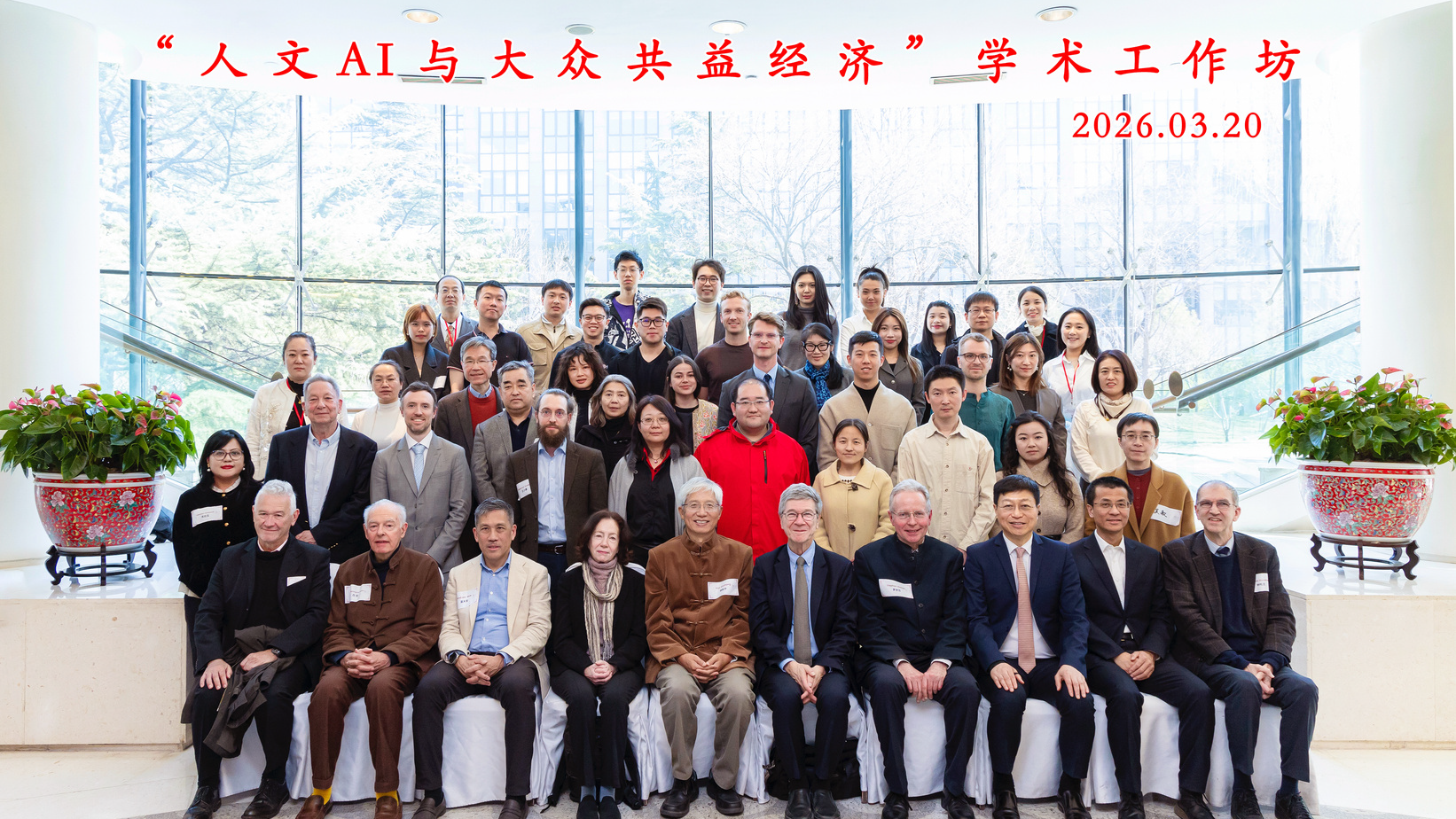
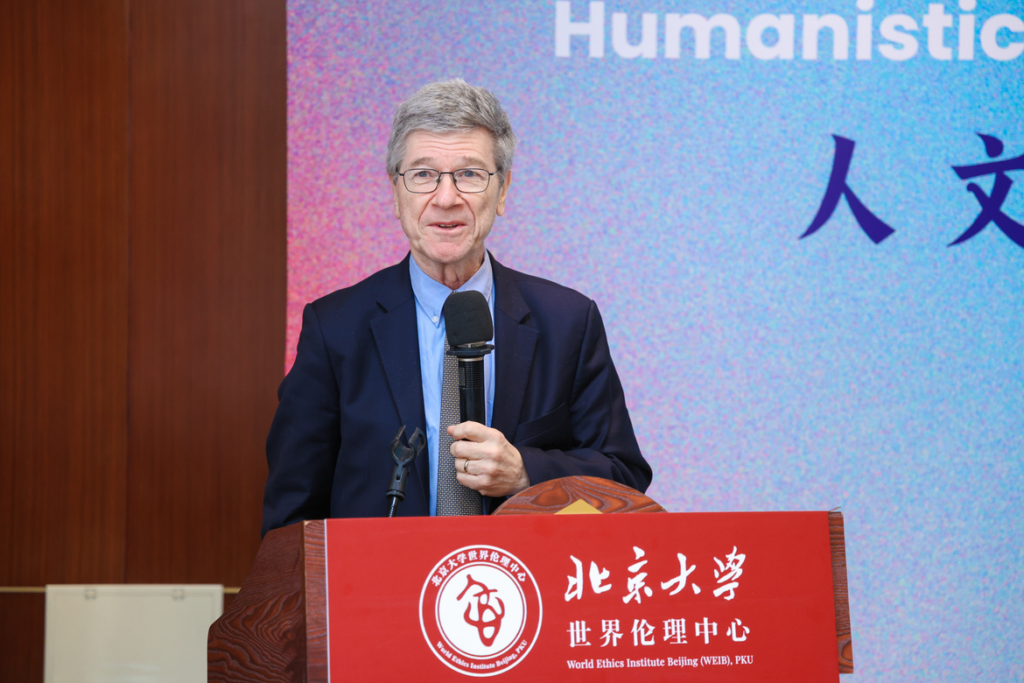
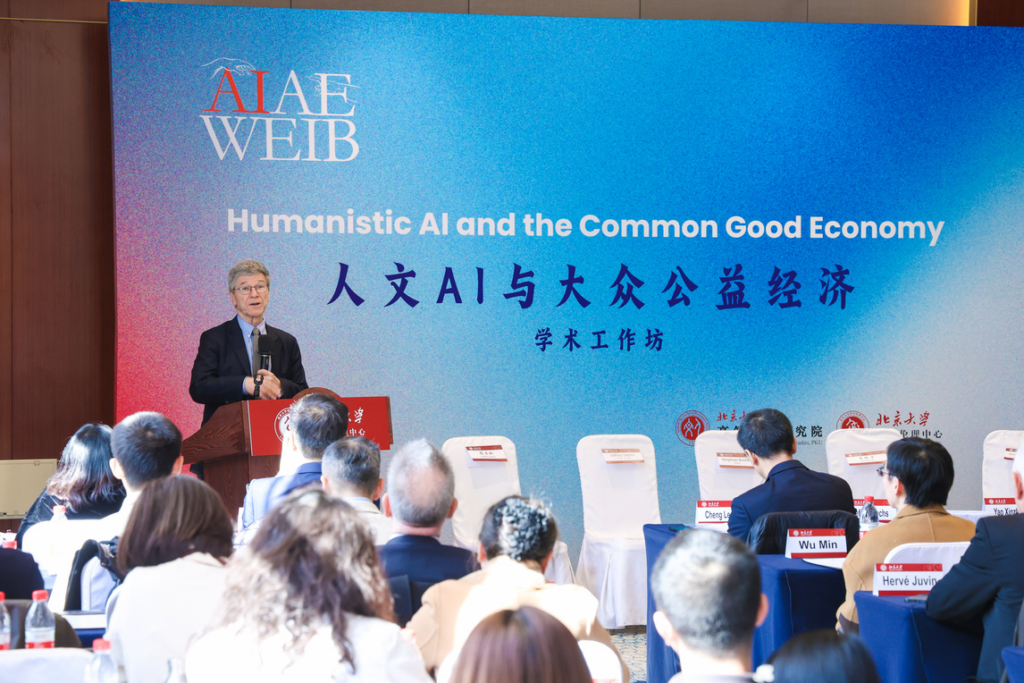
On 20 March 2026, the academic workshop “Humanistic AI and the Common Good Economy” was initiated by the Peking University Artificial Intelligence and Applied Ethics (AIAE) Project and hosted by the World Ethics Center of the Institute for Advanced Humanistic Studies at Peking University. Prof. Jeffrey Sachs delivered the keynote speech, focusing on the Common Good, AI ethics, and global governance. The workshop discussed how AI should move from profit orientation to humanistic orientation, emphasizing public goods, responsible entrepreneurship, and global cooperation. Its
importance lies in reconnecting AI development with human dignity and building a framework for the well-being of all humanity.
This workshop invited Jeffrey Sachs, Professor at Columbia University and President of the UN Sustainable Development Solutions Network, to deliver a keynote speech. Distinguished guests included Cheng Lesong, Chair of the Department of Philosophy and Religious Studies at PKU; Yao Xinzhong, Executive Director of the World Ethics Center at PKU; Stephan Rothlin, Director of the AIAE program of the World Ethics Institute Beijing at PKU; Bernard Lee, Professor at Saint Francis University, Hong Kong; and Veronika Saraswati, Director of the China Studies Center at CSIS Indonesia. They were joined by young scholars from the Yenching Academy of Peking University and Schwarzman College at Tsinghua University to conduct in-depth discussions on constructing a new economic framework serving human well-being in the AI era.
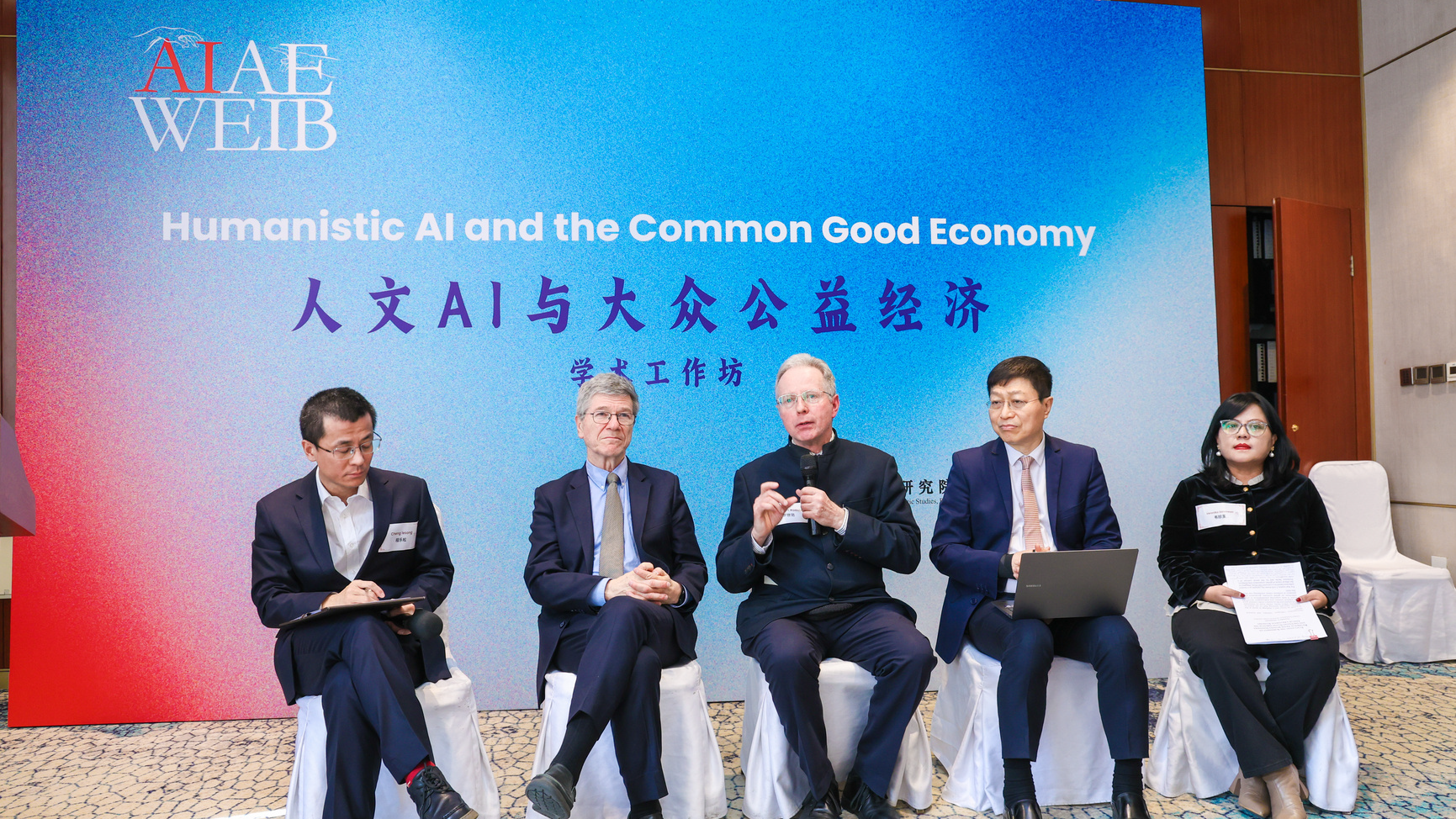
In his keynote speech, Professor Sachs pointed out that one of the most severe challenges facing the world today is the lack of consensus on the concept of the “Common Good.” Tracing the history of Western political philosophy, he criticized the Anglo-American tradition represented by Hobbes and Locke for reducing politics to “power management” and “property protection,” leading to the neglect or denial of
the common good in modern society and an endless pursuit of power.
Sachs compared AI technology to the steam engine of the 19th century, emphasizing that it not only profoundly changes productivity but also reshapes social structures and human lifestyles. He warned that issues such as extreme wealth concentration and the militarization of AI are exacerbating social inequality and threatening global security and stability.